What is Animation? Animation History?

- What is Animation?
- English --- Animation is a dynamic medium in which images or objects are manipulated to appear as moving images. In traditional animation the images were drawn (or painted) by hand on cels to be photographed and exhibited on film. Nowadays most animations are made with computer-generated imagery (CGI). Computer animation can be very detailed 3D animation, while 2D computer animation can be used for stylistic reasons, low bandwidth or faster real-time renderings. Other common animation methods apply a stop motion technique to two and three-dimensional objects like paper cutouts, puppets or clay figures. The stop motion technique where live actors are used as a frame-by-frame subject is known as pixilation.
Commonly the effect of animation is achieved by a rapid succession of sequential images that minimally differ from each other. The illusion—as in motion pictures in general—is thought to rely on the phi phenomenon and beta movement, but the exact causes are still uncertain. Analog mechanical animation media that rely on the rapid display of sequential images include the phénakisticope, zoetrope, flip book, praxinoscope and film. Television and videoare popular electronic animation media that originally were analog and now operate digitally. For display on the computer, techniques like animated GIF and Flash animation were developed.
Apart from short films, feature films, animated gifs and other media dedicated to the display moving images, animation is also heavily used for video games, motion graphics and special effects.
The physical movement of image parts through simple mechanics in for instance the moving images in magic lantern shows can also be considered animation. Mechanical animation of actual robotic devices is known as animatronics.
Animators are artists who specialize in creating animation.
Etymology
The word "animation" stems from the Latin "animationem" (nominative "animatio"), noun of action from past participle stem of "animare", meaning "the action of imparting life". The primary meaning of the English word is "liveliness" and has been in use much longer than the meaning of "moving image medium".[1]History
The history of animation started long before the development of cinematography. Humans have probably attempted to depict motion as far back as the paleolithic period. Shadow play and the magic lantern offered popular shows with moving images as the result of manipulation by hand and/or some minor mechanics. In 1833 the phenakistiscope introduced the stroboscopic principle of modern animation, which would also provide the basis for the zoetrope (1866), the flip book (1868), the praxinoscope (1877) and cinematography.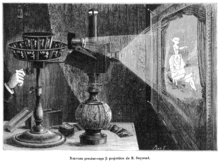
A projecting praxinoscope, 1882, here shown superimposing an animated figure on a separately projected background sceneCharles-Émile Reynaud further developed his projection praxinoscope into the Théâtre Optique with transparent hand-painted colorful pictures in a long perforated strip wound between two spools, patented in December 1888. From 28 October 1892 to March 1900 Reynaud gave over 12,800 shows to a total of over 500.000 visitors at the Musée Grévin in Paris. His Pantomimes Lumineusesseries of animated films each contained 300 to 700 frames that were manipulated back and forth to last 10 to 15 minutes per film. Piano music, song and some dialogue were performed live, while some sound effects were synchronized with an electromagnet.When film became a common medium some manufacturers of optical toys adapted small magic lanterns into toy film projectors for short loops of film. By 1902 they were producing many chromolithography film loops, usually by tracing live-action film footage (much like the later rotoscoping technique).Some early filmmakers, including J. Stuart Blackton, Arthur Melbourne-Cooper, Segundo de Chomón and Edwin S. Porter experimented with stop-motion animation, possibly since around 1899. Blackton's The Haunted Hotel (1907) was the first huge success that baffled audiences with objects apparently moving by themselves and inspired other filmmakers to try the technique for themselves.J. Stuart Blackton also experimented with animation drawn on blackboards and some cutout animation in Humorous Phases of Funny Faces (1906).
The oldest known animated film created by using what became known as traditional (hand-drawn) animation - the 1908 Fantasmagorie by Émile CohlIn 1908 Émile Cohl's Fantasmagorie was released with a white-on-black chalkline look created with negative prints from black ink drawings on white paper.[2] The film largely consists of a stick figure moving about and encountering all kinds of morphing objects, including a wine bottle that transforms into a flower.[3]Inspired by Émile Cohl's stop-motion film Les allumettes animées [Animated Matches] (1908), Ladislas Starevich started making his influential puppet animations in 1910.Winsor McCay's Little Nemo (1911) showcased very detailed drawings. His Gertie the Dinosaur (1914) was an also an early example of character development in drawn animation.[4]Charlie in Turkey (1916), an animated film by Pat Sullivan for Keen Cartoon Corporation.During the 1910s, the production of animated short films typically referred to as "cartoons", became an industry of its own and cartoon shorts were produced for showing in movie theaters.[5] The most successful producer at the time was John Randolph Bray, who, along with animator Earl Hurd, patented the cel animation process that dominated the animation industry for the rest of the decade.[6][7]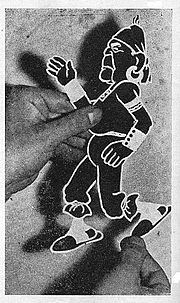
Italian-Argentine cartoonist Quirino Cristiani showing the cut and articulated figure of his satirical character El Peludo(based on President Yrigoyen) patented in 1916 for the realization of his movies, including the world's first animated feature film El Apóstol.[8]El Apóstol (Spanish: "The Apostle") was a 1917 Argentine animated film utilizing cutout animation, and the world's first animated feature film.[9][10] Unfortunately, a fire that destroyed producer Federico Valle's film studio incinerated the only known copy of El Apóstol, and it is now considered a lost film.[11][12]In 1932, the first short animated film created entirely with Technicolor (using red/green/blue photographic filters and three strips of film) was Walt Disney's Flowers and Trees, directed by Burt Gillett. But, the first feature film that was done with this technique, apart from the movie The Vanities Fair (1935), by Rouben Mamoulian, was "Snow White and the Seven Dwarfs", also by Walt Disney.[13]In 1958, Hanna-Barbera released The Huckleberry Hound Show, the first half hour television program to feature only in animation.[14] Terrytoons released Tom Terrific that same year.[15][16] Television significantly decreased public attention to the animated shorts being shown in theaters.[14]Computer animation has become popular since Toy Story (1995), the first feature-length animated film completely made using this technique.[17]In 2008, the animation market was worth US$68.4 billion.[18] Animation as an art and industry continues to thrive as of the mid-2010s because well-made animated projects can find audiences across borders and in all four quadrants. Animated feature-length films returned the highest gross margins (around 52%) of all film genres in the 2004–2013 timeframe.[19]Techniques
Traditional animation

An example of traditional animation, a horse animated by rotoscoping from Eadweard Muybridge's 19th-century photosTraditional animation (also called cel animation or hand-drawn animation) was the process used for most animated films of the 20th century.[20] The individual frames of a traditionally animated film are photographs of drawings, first drawn on paper.[21] To create the illusion of movement, each drawing differs slightly from the one before it. The animators' drawings are traced or photocopied onto transparent acetate sheets called cels,[22] which are filled in with paints in assigned colors or tones on the side opposite the line drawings.[23] The completed character cels are photographed one-by-one against a painted background by a rostrum camera onto motion picture film.[24]The traditional cel animation process became obsolete by the beginning of the 21st century. Today, animators' drawings and the backgrounds are either scanned into or drawn directly into a computer system.[25][26] Various software programs are used to color the drawings and simulate camera movement and effects.[27] The final animated piece is output to one of several delivery media, including traditional 35 mm film and newer media with digital video.[28][25] The "look" of traditional cel animation is still preserved, and the character animators' work has remained essentially the same over the past 70 years.[29]Some animation producers have used the term "tradigital" (a play on the words "traditional" and "digital") to describe cel animation that uses significant computer technology.Examples of traditionally animated feature films include Pinocchio (United States, 1940),[30] Animal Farm (United Kingdom, 1954), and The Illusionist(British-French, 2010). Traditionally animated films produced with the aid of computer technology include The Lion King (US, 1994), The Prince of Egypt (US, 1998), Akira (Japan, 1988),[31] Spirited Away (Japan, 2001), The Triplets of Belleville (France, 2003), and The Secret of Kells (Irish-French-Belgian, 2009).Full animation
Full animation refers to the process of producing high-quality traditionally animated films that regularly use detailed drawings and plausible movement,[32]having a smooth animation.[33] Fully animated films can be made in a variety of styles, from more realistically animated works like those produced by the Walt Disney studio (The Little Mermaid, Beauty and the Beast, Aladdin, The Lion King) to the more 'cartoon' styles of the Warner Bros. animation studio. Many of the Disney animated features are examples of full animation, as are non-Disney works, The Secret of NIMH (US, 1982), The Iron Giant (US, 1999), and Nocturna(Spain, 2007). Fully animated films are animated at 24 frames per second, with a combination of animation on ones and twos, meaning that drawings can be held for one frame out of 24 or two frames out of 24.[34]Limited animation
Limited animation involves the use of less detailed or more stylized drawings and methods of movement usually a choppy or "skippy" movement animation.[35] Limited animation uses fewer drawings per second, thereby limiting the fluidity of the animation. This is a more economic technique. Pioneered by the artists at the American studio United Productions of America,[36] limited animation can be used as a method of stylized artistic expression, as in Gerald McBoing-Boing (US, 1951), Yellow Submarine (UK, 1968), and certain anime produced in Japan.[37] Its primary use, however, has been in producing cost-effective animated content for media for television (the work of Hanna-Barbera,[38] Filmation,[39] and other TV animation studios[40]) and later the Internet (web cartoons).Rotoscoping
Rotoscoping is a technique patented by Max Fleischer in 1917 where animators trace live-action movement, frame by frame.[41] The source film can be directly copied from actors' outlines into animated drawings,[42] as in The Lord of the Rings (US, 1978), or used in a stylized and expressive manner, as in Waking Life(US, 2001) and A Scanner Darkly (US, 2006). Some other examples are Fire and Ice (US, 1983), Heavy Metal (1981), and Aku no Hana (2013).Live-action/animation
Live-action/animation is a technique combining hand-drawn characters into live action shots or live action actors into animated shots.[43] One of the earlier uses was in Koko the Clown when Koko was drawn over live action footage.[44]Other examples include Who Framed Roger Rabbit (US, 1988), Space Jam (US, 1996) and Osmosis Jones (US, 2001).Stop motion animation
Stop-motion animation is used to describe animation created by physically manipulating real-world objects and photographing them one frame of film at a time to create the illusion of movement.[45] There are many different types of stop-motion animation, usually named after the medium used to create the animation.[46] Computer software is widely available to create this type of animation; traditional stop motion animation is usually less expensive but more time-consuming to produce than current computer animation.[46]- Puppet animation typically involves stop-motion puppet figures interacting in a constructed environment, in contrast to real-world interaction in model animation.[47] The puppets generally have an armature inside of them to keep them still and steady to constrain their motion to particular joints.[48]Examples include The Tale of the Fox (France, 1937), The Nightmare Before Christmas (US, 1993), Corpse Bride (US, 2005), Coraline (US, 2009), the films of Jiří Trnka and the adult animated sketch-comedy television series Robot Chicken (US, 2005–present).Puppetoon, created using techniques developed by George Pal,[49] are puppet-animated films that typically use a different version of a puppet for different frames, rather than simply manipulating one existing puppet.[50]
- Clay animation, or Plasticine animation (often called claymation, which, however, is a trademarked name), uses figures made of clay or a similar malleable material to create stop-motion animation.[45][51] The figures may have an armature or wire frame inside, similar to the related puppet animation (below), that can be manipulated to pose the figures.[52]Alternatively, the figures may be made entirely of clay, in the films of Bruce Bickford, where clay creatures morph into a variety of different shapes. Examples of clay-animated works include The Gumby Show (US, 1957–1967), Mio Mao (Italy, 1974-2005), Morph shorts (UK, 1977–2000), Wallace and Gromitshorts (UK, as of 1989), Jan Švankmajer's Dimensions of Dialogue(Czechoslovakia, 1982), The Trap Door (UK, 1984). Films include Wallace & Gromit: The Curse of the Were-Rabbit, Chicken Run and The Adventures of Mark Twain.[53]
- Strata-cut animation, Strata-cut animation is most commonly a form of clay animation in which a long bread-like "loaf" of clay, internally packed tight and loaded with varying imagery, is sliced into thin sheets, with the animation camera taking a frame of the end of the loaf for each cut, eventually revealing the movement of the internal images within.[54]
- Cutout animation is a type of stop-motion animation produced by moving two-dimensional pieces of material paper or cloth.[55] Examples include Terry Gilliam's animated sequences from Monty Python's Flying Circus (UK, 1969–1974); Fantastic Planet (France/Czechoslovakia, 1973) ; Tale of Tales (Russia, 1979), The pilot episode of the adult television sitcom series (and sometimes in episodes) of South Park (US, 1997) and the music video Live for the moment, from Verona Riots band (produced by Alberto Serrano and Nívola Uyá, Spain 2014).
- Silhouette animation is a variant of cutout animation in which the characters are backlit and only visible as silhouettes.[56] Examples include The Adventures of Prince Achmed (Weimar Republic, 1926) and Princes et princesses (France, 2000).
- Model animation refers to stop-motion animation created to interact with and exist as a part of a live-action world.[57] Intercutting, matte effects and split screens are often employed to blend stop-motion characters or objects with live actors and settings.[58] Examples include the work of Ray Harryhausen, as seen in films, Jason and the Argonauts (1963),[59] and the work of Willis H. O'Brien on films, King Kong (1933).
- Go motion is a variant of model animation that uses various techniques to create motion blur between frames of film, which is not present in traditional stop-motion.[60] The technique was invented by Industrial Light & Magic and Phil Tippett to create special effect scenes for the film The Empire Strikes Back (1980).[61] Another example is the dragon named "Vermithrax" from Dragonslayer (1981 film).[62]
- Object animation refers to the use of regular inanimate objects in stop-motion animation, as opposed to specially created items.[63]
- Graphic animation uses non-drawn flat visual graphic material (photographs, newspaper clippings, magazines, etc.), which are sometimes manipulated frame-by-frame to create movement.[64] At other times, the graphics remain stationary, while the stop-motion camera is moved to create on-screen action.
- Brickfilm are a subgenre of object animation involving using Lego or other similar brick toys to make an animation.[65][66] These have had a recent boost in popularity with the advent of video sharing sites, YouTube and the availability of cheap cameras and animation software.[67]
- Pixilation involves the use of live humans as stop motion characters.[68] This allows for a number of surreal effects, including disappearances and reappearances, allowing people to appear to slide across the ground, and other effects.[68] Examples of pixilation include The Secret Adventures of Tom Thumb and Angry Kid shorts.
- Bengali--
- অ্যানিমেশন একটি গতিশীল মাধ্যম যা ছবিগুলি বা বস্তুগুলিকে চলন্ত ছবি হিসাবে দেখাতে ব্যবহৃত হয়। ঐতিহ্যগত অ্যানিমেশনে ছবিগুলি ছবিতে সেলুলের হাতে হাতে তুলে দেওয়া ছবিটি চিত্রায়িত করা হয়েছিল এবং প্রদর্শন করা হয়েছিল। আজকাল বেশিরভাগ অ্যানিমেশন কম্পিউটার-তৈরি চিত্রাবলী (CGI) দিয়ে তৈরি করা হয়। কম্পিউটার অ্যানিমেশনটি খুব বিস্তারিত 3D অ্যানিমেশন হতে পারে, যখন 2D কম্পিউটার অ্যানিমেশনের ব্যবহার শৈলীগত কারণে, কম ব্যান্ডউইথ অথবা দ্রুত রিয়েল-টাইম রেডারিংয়ের জন্য হতে পারে। অন্যান্য সাধারণ অ্যানিমেশনের পদ্ধতিগুলি কাগজ এবং কাটার আকারের দুইটি এবং ত্রি-মাত্রিক বস্তুর মত স্টপ মোশন কৌশল প্রয়োগ করে। স্টপ মোশন টেকনিক যেখানে লাইভ অভিনেতা একটি ফ্রেম বাই ফ্রেম বিষয় হিসাবে ব্যবহৃত হয় পিক্সেলিং নামে পরিচিত।
- স্বাভাবিকভাবেই অ্যানিমেশন প্রভাব ক্রমশ ক্রমশ ক্রমবর্ধমান চিত্রগুলির দ্বারা উত্তোলিত হয় যা একে অপরের থেকে আলাদা। সাধারণভাবে মোশন ছবির মতো বিভ্রম - ফী প্রপঞ্চ এবং বিটা আন্দোলনের উপর ভরসা করা বলে মনে করা হয়, কিন্তু সঠিক কারণগুলি এখনও অনিশ্চিত। এনালগ মেকানিক্যাল অ্যানিমেশন মিডিয়ার ক্রমবর্ধমান চিত্রের দ্রুত প্রদর্শনের উপর ভিত্তি করে ফিন্যাকিস্টিক, জুয়েটোপ, ফ্লিপ বুক, প্র্যাকটিসিসকোপ এবং ফিল্ম অন্তর্ভুক্ত। টেলিভিশন এবং ভিডিওর জনপ্রিয় ইলেকট্রনিক অ্যানিমেশন মিডিয়া মূলত এনালগ ছিল এবং এখন ডিজিটালভাবে কাজ করে। কম্পিউটারে প্রদর্শনের জন্য, অ্যানিমেটেড জিআইএফ এবং ফ্ল্যাশ অ্যানিমেশনের মত প্রযুক্তিগুলি তৈরি করা হয়েছিল।
- চলচ্চিত্র প্রদর্শনীতে নিবেদিত স্বল্পদৈর্ঘ্য চলচ্চিত্র, অ্যানিমেটেড জিফ এবং অন্যান্য মিডিয়া ছাড়াও অ্যানিমেশনটি ভিডিও গেম, মোশন গ্রাফিক্স এবং বিশেষ প্রভাবের জন্য ব্যাপকভাবে ব্যবহৃত হয়।
- উদাহরণস্বরূপ, যান্ত্রিক ল্যান্টারন শোগুলিতে চলন্ত চিত্রগুলি অ্যানিমেশন হিসেবে বিবেচনা করা যায়। প্রকৃত রোবোটিক ডিভাইসের মেকানিক্যাল অ্যানিমেশনটি অ্যানিমাত্তট্রনিকস নামে পরিচিত।
- অ্যানিম্যান্টরা এমন শিল্পী যারা অ্যানিমেশন তৈরিতে বিশেষজ্ঞ।
- EtymologyEdit
- শব্দ "অ্যানিমেশন" ল্যাটিন "অ্যানিমেশন" (নামমাত্র "অ্যানিম্যান্টিও") থেকে উত্পন্ন হয়, "প্রাণবন্ত" এর অতীতের প্রজন্মের স্টেম থেকে কর্মের নাম, অর্থ "জীবন প্রদানের কর্ম"। ইংরেজি শব্দটির প্রাথমিক অর্থ হলো "প্রাণবন্ত" এবং "চলন্ত ছবিটি মাঝারি" অর্থের চেয়ে অনেক বেশি ব্যবহার করা হয়েছে
- ইতিহাস
- মূল নিবন্ধ: অ্যানিমেশন ইতিহাস
- 
- ইডউয়ার্ড মিউইজিজ (1893) দ্বারা একটি ফিনিকস্টোসকপ ডিস্ক
- সিনটামোগ্রাফির বিকাশের আগেই অ্যানিমেশনের ইতিহাস শুরু হয়েছিল। মানুষ সম্ভবত পিএলওলিথিক যুগ হিসেবে গতিপথকে চিহ্নিত করার চেষ্টা করেছে। ছায়া খেলা এবং যাদু লণ্ঠন হাত এবং / অথবা কিছু ক্ষুদ্র মেকানিক্স দ্বারা ম্যানিপুলেশন ফলাফল হিসাবে চলন্ত ইমেজ সঙ্গে জনপ্রিয় শো প্রস্তাব। 1833 সালে ফেনাকিস্টিস্পপ আধুনিক অ্যানিমেশনের স্ট্রোবোস্কোপিক নীতির সূচনা করে, যা ঝোড়ো চিঠি (1866), ফ্লিপ বই (1868), প্র্যাকসিসিনসপপ (1877) এবং সিনেমাটোগ্রাফির জন্য ভিত্তি প্রদান করবে।
- 
- একটি প্রজেক্টিং praxinoscope, 1882, এখানে একটি পৃথকভাবে প্রদর্শিত পাখি দৃশ্যের একটি অ্যানিমেটেড চিত্র superimposing দেখানো
- চার্লস-এমেইল রেইনউড আরও 1888 সালের ২8 শে অক্টোবর 18২9 থেকে মার্চ 1 9 00 পর্যন্ত প্যাটেন্টেড দুটি স্পুলের মধ্যে একটি দীর্ঘ ছিপি প্যাচ জিন মধ্যে স্বচ্ছ হাতে-আঁকা রঙিন ছবি দিয়ে থিয়েটার অপটিক্সে তার প্রজেকশন প্র্যাকটিসিসেরোপ প্রসারিত করেন। রাইনাউড মোট 1২,800 শো দিয়েছেন প্যারিসে মুশি গ্রীভিনে 500.000 এর বেশি দর্শক। তার প্যান্টোমাইমস অ্যানিমেটেড চলচ্চিত্রের লুমিনিউসারসগুলির মধ্যে রয়েছে 300 থেকে 700 ফ্রেম যা প্রতিটি চলচ্চিত্রে 10 থেকে 15 মিনিটে শেষ পর্যন্ত পিছিয়ে যায়। পিয়ানো সঙ্গীত, গান এবং কিছু সংলাপ লাইভ সঞ্চালিত হয়, কিছু শব্দ প্রভাব একটি ইলেক্ট্রোম্যাগনেট সঙ্গে সিঙ্ক্রোনাইজ করা হয়, যখন।
- যখন ফিল্মটি একটি সাধারণ মাধ্যম হয়ে উঠেছিল তখন অপটিক্যাল খেলনাগুলির কিছু নির্মাতারা চলচ্চিত্রের ছোট ছোট লুপের জন্য খেলনা চলচ্চিত্র প্রজেক্টরগুলিতে ছোট জাদু ল্যান্টারস অভিযোজিত হয়েছিল। 190২ সাল নাগাদ তারা অনেক ক্রোমোলিথোগ্রাফি ফিল্ম লুপ তৈরি করছিল, সাধারণত লাইভ-এভিনিউ ফিল্ম ফুটেজ (অনেকটা পরে রোটোস্কোপিং টেকনিকের মত) ট্রেস করে।
- জে। স্টুয়ার্ট ব্ল্যাকটন, আর্থার মেলবোর্ন-কপার, সেগুনদো ডি চোমোন এবং এডউইন এস। পোর্টার সহ কিছু কিছু চলচ্চিত্র নির্মাতা স্টপ-মোশন অ্যানিমেশনের সাথে সম্ভবত 1899 সাল থেকে পরীক্ষামূলকভাবে ব্যবহার করেন। ব্ল্যাকটন এর দ্য হুনটেড হোটেল (1907) প্রথম বিশাল সফলতা ছিল যা দর্শকদের বিভ্রান্ত করেছিল বস্তুর সঙ্গে দৃশ্যত নিজেদের দ্বারা চলন্ত এবং নিজেদের জন্য কৌশল চেষ্টা করার জন্য অন্যান্য চলচ্চিত্র নির্মাতা অনুপ্রাণিত।
- জে স্টুয়ার্ট ব্ল্যাকটন ব্ল্যাকবোর্ডে আকৃষ্ট অ্যানিমেশন এবং মজার ফ্যাসস (1906) এর হাস্যরস পর্বের কিছু কাটআউট অ্যানিমেশনের সাথেও পরীক্ষা করেছেন।
- প্রাচীনতম পরিচিত অ্যানিমেটেড ফিল্ম যা ঐতিহ্যগত (হস্তনির্মিত) অ্যানিমেশন নামে পরিচিত হয়ে ওঠে - 1 9 08 ফ্যানটামমিজোরি এমিলে কহেল
- 1908 সালে এমিলে কহলের ফ্যানটামমজরিটিকে সাদা কাগজে কালো খাঁড়ি অঙ্কন থেকে সাদা কাগজে নেতিবাচক প্রিন্ট দিয়ে তৈরি একটি সাদা-অন-কালো চাচলের চেহারা দিয়ে মুক্তি পায়। [2] এই ছবিটি মূলত একটি লাঠি আকৃতি ধারণ করে এবং সব রকমের মোরিফিং অবজেক্টের সম্মুখীন হয়, যার মধ্যে রয়েছে একটি বোতল বোতল যা একটি ফুলের মধ্যে রূপান্তরিত হয়। [3]
- এমিলে কোহলের স্টপ-মোশন ফিল্ম লেস অ্যালুমেটস অ্যানিমিনিস (অ্যানিমেশন মেচেসস) (1908) দ্বারা অনুপ্রাণিত, ল্যাডিসালাস স্টারভিচ তার প্রভাবশালী পুতুল অ্যানিমেশন 1910 সালে শুরু করেন।
- উইনসার ম্যাককেসের লিটল নেমো (1911) খুব বিস্তারিত অঙ্কন দেখিয়েছেন। তাঁর গেরটি ডাইনোসর (1914) ছিল টানা অ্যানিমেশনে চরিত্র উন্নয়নের একটি প্রাথমিক উদাহরণ। [4]
-  প্লে মিডিয়া
- তুরস্কের চার্লি (1916), প্রিন্ট কার্টুন কর্পোরেশনের জন্য প্যাট সুলিভানের একটি অ্যানিমেটেড ফিল্ম।
- 1 9 10-এর দশকে, অ্যানিমেটেড ছোট্ট চলচ্চিত্রগুলির উৎপাদনে সাধারণত "কার্টুন" বলা হয়, এটি একটি নিজস্ব শিল্প হয়ে ওঠে এবং চলচ্চিত্রের থিয়েটারগুলির প্রদর্শনীতে কার্টুনের শর্টকাট তৈরি হয়। [5] সেই সময়ে সবচেয়ে সফল প্রযোজক জন রান্ডলফ ব্রায় ছিলেন, যিনি এ্যানিম্যান্টর আর্ল হর্ডের সাথে, অ্যালুমিনিয়াম শিল্পের উপরে যে দশ দশকের বাকি দশকে অভিনয় করেছিলেন সেটি পেটেন্ট করেছিলেন। [6] [7]
- 
- ইতালীয়-আর্জেন্টিনার কার্টুনিস্ট কুইরিন ক্রিস্টিয়ানি তাঁর প্রবন্ধটি বিশ্লেষণকারী চরিত্র এল পলুডো (রাষ্ট্রপতি ইরিয়েয়েনের উপর ভিত্তি করে) এর চিত্রনাট্য তুলে ধরেছেন যা 1916 সালে তাঁর চলচ্চিত্রের বাস্তবায়ন করার জন্য পেটেন্ট করে, যার মধ্যে বিশ্বের প্রথম অ্যানিমেটেড ফিচার ফিল্ম এল অ্যাপোস্টোল। [8]
- এল এপোস্টোল (স্প্যানিশ: "দ্য অ্যাপস্টেল") ছিলেন 1917 সালের আর্জেন্টিনীয় অ্যানিমেটেড ছবিটি কাট আউট অ্যানিমেশন এবং বিশ্বের প্রথম অ্যানিমেটেড ফিচার ফিল্ম। [9] [10] দুর্ভাগ্যবশত, প্রযোজক ফেডেরিকো ভ্যালির চলচ্চিত্রের স্টুডিওটি ধ্বংস করে এমন একটি অগ্নিকাণ্ডে এল এপোস্টোলের একমাত্র পরিচিত কপি জড়িয়ে পড়ে এবং এটি এখন একটি হারিয়ে যাওয়া চলচ্চিত্র বলে মনে করা হয়। [11] [12]
- 1 9 32 সালে, প্রথম ছোট অ্যানিমেটেড চলচ্চিত্র সম্পূর্ণভাবে টেকনিকালর (লাল / সবুজ / নীল ছবির ফিল্টার ব্যবহার করে এবং তিনটি চলচ্চিত্রে ছবির মাধ্যমে নির্মিত) ছিল ওয়াল্ট ডিজনি এর ফুল এবং ট্র্যাশ, যা পরিচালিত হয় বিर्ट গিললেট। কিন্তু, প্রথম কৌশলটি এই কৌশলটির সাথে সম্পন্ন করা হয়েছিল, চলচ্চিত্রটি "ভ্যানিটিস ফেয়ার" (1935) থেকে রৌন ম্যামলিয়েনের পাশাপাশি "স্নো হোয়াইট অ্যান্ড দ্য সেভেন ডার্ফস" এবং ওয়াল্ট ডিজনিও ছিলেন। [13]
- 1958 সালে, হান্না-বারবার মুক্তি পায় হেকলবারিউন্ড হউন্ড শো, প্রথম আধ ঘণ্টা টেলিভিশন অনুষ্ঠানটি শুধুমাত্র অ্যানিমেশনে প্রদর্শন করা হয়। [14] সেই বছরই টেরি টেরোইটস টম জেলিফটকে মুক্তি দেন। [15] [16] থিয়েটারে দেখানো হ'ল অ্যানিমেটেড শর্টসগুলিতে টেলিভিশন উল্লেখযোগ্যভাবে হ্রাস পায়। [14]
- টেকি স্টোরি (1995) থেকে কম্পিউটার অ্যানিমেশন জনপ্রিয় হয়ে উঠেছে, প্রথম বৈশিষ্ট্য-দৈর্ঘ্য এনিমেটেড ফিল্মটি এই কৌশলটি ব্যবহার করে সম্পূর্ণরূপে তৈরি হয়েছে। [17]
- 2008 সালে, অ্যানিমেশন বাজারের মূল্য $ 68.4 বিলিয়ন মার্কিন ডলার ছিল। [18] একটি শিল্প ও শিল্প হিসাবে অ্যানিমেশনটি ২010 সালের মাঝামাঝি সময়ে উন্নতিলাভ করা অব্যাহত রাখে কারণ সুপ্রতিষ্ঠিত অ্যানিমেটেড প্রকল্পগুলি সীমানা জুড়ে ও চারটি চতুর্ভুজায় দর্শকদের খুঁজে পেতে পারে। অ্যানিমেটেড বৈশিষ্ট্য-দৈর্ঘ্যের চলচ্চিত্রগুলি 2004-2013 সময়সীমার মধ্যে সর্বাধিক গ্রস মার্জিন (প্রায় 52%) সমস্ত চলচ্চিত্র শৈলীতে ফিরে আসে।


.GIF)


Comments
Post a Comment